
What to Put in a Brag Sheet for a Recommendation Letter
Sep 28, 2026A brag sheet helps a teacher write a stronger college recommendation letter. It gives the teacher useful details about the student’s work, interests, responsibilities, and goals.
By Sarah Bowen, Founder of FutureU
The point is not to brag in an exaggerated way. The point is to make it easier for the teacher to remember specific examples and write a letter that feels personal.
Quick answer
A good brag sheet usually includes basic information, deadlines, academic interests, classroom examples, activities, responsibilities, goals, and a few personal qualities supported by evidence.
Specific beats impressive. A short, honest example is usually more helpful than a long list of awards with no context.
If your student is preparing to ask for a recommendation, the free Ask With Confidence: Letter of Recommendation Starter Guide can help them make the request clearly and respectfully. The Ask With Confidence: College Letter of Recommendation Guide includes templates, examples, and planning checklists for the whole process.
What is a brag sheet?
A brag sheet is a short document students share with a teacher, counselor, or recommender. It gives the recommender background they can use while writing.
Teachers may know a student well in the classroom but not know everything about their activities, family responsibilities, jobs, goals, or college plans. A brag sheet fills in some of those gaps.
It should not try to write the recommendation letter for the teacher. It should give the teacher useful raw material.
Why does specificity matter?
Generic information leads to generic letters. Specific details help a teacher remember real moments.
For example, “I am hardworking” is less useful than a brief note about staying after class to revise an essay, leading a group project, or improving after a difficult unit.
The strongest details are usually connected to something the teacher actually saw: class participation, a project, a paper, a lab, a discussion, a presentation, or growth over time.
What should a brag sheet include?
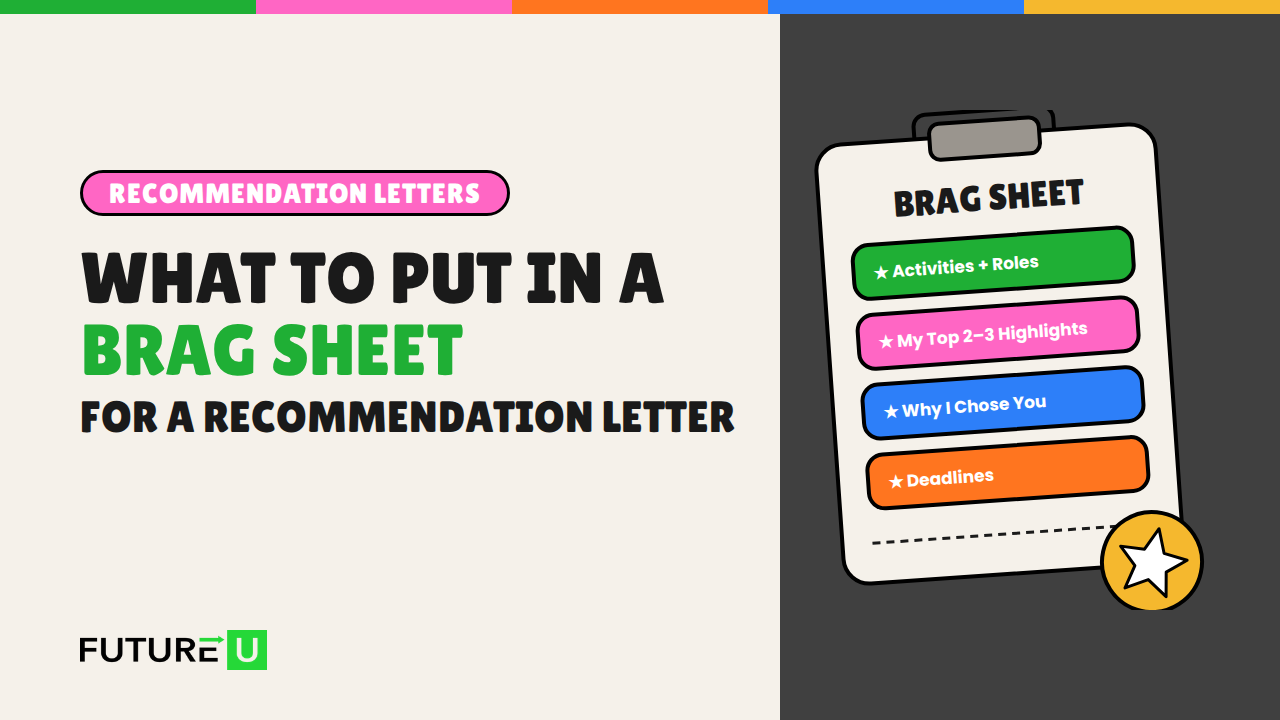
Students do not need a complicated document. A strong brag sheet can be organized around five broad categories.
1. Basic information and deadlines
This helps the teacher understand what the letter is for and when it is due. Students should include their name, the first deadline, and any submission instructions they have been given.
2. Academic interests and classroom examples
This section should remind the teacher of meaningful work from the class. It might include a project, assignment, discussion, paper, lab, or unit that mattered to the student.
The goal is to help the teacher remember concrete evidence, not to list every good grade.
3. Activities and responsibilities
Teachers may not know what a student does outside of class. A short summary of activities, work, caregiving, volunteering, leadership, or other responsibilities can provide helpful context.
This section should be selective. A few meaningful commitments are better than a long list with no explanation.
4. Personal qualities with evidence
Instead of listing traits like “hardworking,” “kind,” or “determined,” students should connect qualities to examples.
A useful brag sheet shows the quality through a moment, pattern, or responsibility. This gives the recommender something concrete to work with.
5. Helpful context, if relevant
Some students have context that may help a recommender understand their story. This could include a major challenge, a schedule constraint, a family responsibility, a move, a health issue, or a change in academic direction.
Students should only share what they are comfortable sharing. A brag sheet does not need to include private information to be useful.
What should students avoid?
A brag sheet should not be a résumé copied into paragraph form. It should also avoid exaggeration, vague praise, or overly polished language that does not sound like the student.
Students should avoid:
- Claiming qualities without examples
- Listing every activity they have ever done
- Writing the letter for the teacher
- Including sensitive details they do not want shared
- Sending a long document the night before the deadline
The best brag sheets are clear, honest, and easy to scan.
How long should a brag sheet be?
For most students, one to two pages is enough. The brag sheet should give the teacher useful reminders without creating extra work.
If the school provides its own form, students should follow that format. If not, a simple document with headings and short notes is usually fine.
Can parents help with a brag sheet?
Yes, but parents should not write it for the student. The student’s voice matters.
Parents can help the student remember responsibilities, commitments, challenges, or growth that the student may overlook. They can also help the student keep the document organized and focused.
The final brag sheet should still sound like the student and reflect what the student is comfortable sharing.
How is a brag sheet different from a résumé?
A résumé usually lists roles, activities, jobs, awards, and dates. A brag sheet gives more context. It explains what mattered, what the student learned, how they contributed, and what examples might help the recommender write with detail.
Students may use both, but they are not the same thing.
Final thought
A brag sheet does not need to be fancy. It needs to be specific, honest, and useful.
The free Ask With Confidence: Letter of Recommendation Starter Guide gives students a clear, respectful, specific framework, one starter script, a 3-point check before sending, and a short parent note for the initial recommendation ask.
The Ask With Confidence: College Letter of Recommendation Guide includes the fill-in-the-blank brag sheet template, example responses, teacher-specific customization guidance, deadlines and materials planning, and checklists students can use throughout the full recommendation process.
Want help asking for a recommendation letter the right way?
Start with the free Ask With Confidence: Letter of Recommendation Starter Guide. It gives students a clear, respectful way to ask, plus a simple framework for what to include before they reach out.
If you want the full set of templates and examples, get the Ask With Confidence: College Letter of Recommendation Guide.
Keep reading
- How to Ask for a College Recommendation Letter
- FERPA and Common App Recommendations: What Students Need to Know
About the Author
Sarah Bowen is the founder of FutureU, where she helps families navigate college planning, recommendation requests, and the transition to college with more clarity and less stress. FutureU resources are designed to help students take ownership of the process while giving parents a calmer way to support them.
Get FutureU college planning updates
Practical tips for teens, parents, and educators on college, careers, and life after high school - plus updates on FutureU resources - delivered straight to your inbox.
We hate SPAM. We will never sell your information, for any reason.